1st Century (Roman Imperial Cult)
The deification of rulers in the early Roman Empire created a state-sanctioned religion known as the Roman Imperial Cult. This article explores the origins of this cult, its key figures, and the profound impact it had on the nascent Christian faith, leading to widespread persecution.
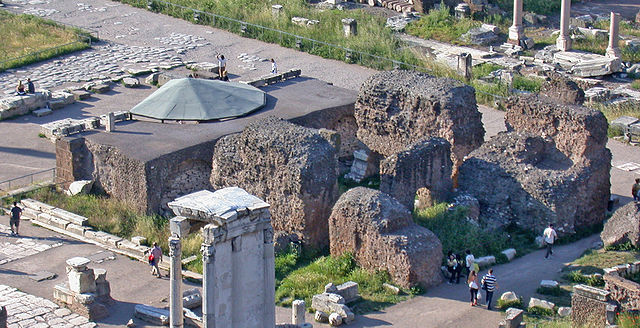
The Divine Emperors
The first Roman to become a god, as part of aiming at monarchy, was Julius Caesar.
...
In 29 BC Octavian dedicated the temple of the divus Julius at the site of Caesar's cremation. Not only had he dutifully, legally and officially honoured his adoptive father as a divus of the Roman state. He "had come into being" through the Julian star and was therefore the divi filius (son of the divinity). But where Caesar had failed, Octavian had succeeded: he had restored the pax deorum (lit. peace of the gods) and re-founded Rome through "August augury". In 27 BC he was voted – and accepted – the elevated title of Augustus.
This established an imperial cult with a close association between political power and religion authority. Not surprisingly, the Romans named the months after these gods in the Roman Calendar which was later converted to the Julian Calendar (Julius Caesar's Calendar):
| English | Name of god |
|---|---|
| January | Janus, the Roman god of beginnings and endings |
| February | Februus, the Roman god of purification of the underworld |
| March | Mars, the Roman god of war |
| April | Apru, the Greek goddess of love, lust, beauty, pleasure, passion, procreation |
| May | Maia, the Greek goddess who gave birth to other gods |
| June | Juno, the Roman goddess of love |
| July | Emperor Julius Caesar, who "came into being" through the Julian star |
| August | Emperor Augustus, the adopted son of Julius Caesar, but considered the "son of god" |
| September | Was the seventh month in the previous Roman calendar |
| October | Was the eighth month in the previous Roman calendar |
| November | Was the ninth month in the previous Roman calendar |
| December | Was the tenth month in the previous Roman calendar |
Persecution of Christians
In July 64 AD the Great Fire of Rome erupted. The fire raged for 6 days, devastating the capital and leaving most residents homeless. For various political reasons, Nero needed someone to blame.
The small minority Christian religion was considered a threat to this existing Roman Imperial cult. Therefore, Emperor Nero blamed the Christians for the Great Fire and turned the Roman state into a violent persecutor of Christians.
To make matters worse, the first Jewish Revolt started in 66 AD which caused the Romans to Siege and destroy Jerusalem including the Jewish temple in 70 CE. These rebellions turned the Romans against any person who served a "Jewish" God.
Ironically, these persecutions effectively caused the Gospel to spread even faster through the Roman Empire.
Conclusion
The Roman Imperial Cult, born from the deification of emperors like Julius Caesar and Augustus, created a powerful state religion that intertwined political loyalty with divine worship. This fusion of power and piety led to a direct conflict with the monotheistic faith of early Christians. The refusal of Christians to worship the emperors as gods was seen as an act of defiance, leading to brutal persecution, most notably under Emperor Nero. Ironically, these attempts to suppress the burgeoning Christian faith had the opposite effect, as the resilience and faith of the martyrs inspired many, contributing to the rapid spread of Christianity throughout the Roman Empire.